Book / Sam Kendall / Resonant Thoughts
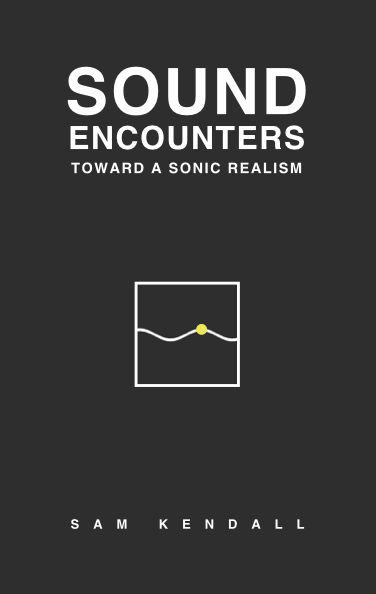
Sound Encounters: Toward a Sonic Realism
What is sound, really? This book argues that sound is more than sensation, signal or metaphor: it is a material, affective and political force whether or not it is heard.
The argument
A material and relational account of sound.
Sound Encounters bridges sound art, materialist philosophy and object-oriented thinking. It develops sonic realism as a practice of attention: mapping what sound does, how it relates and what it withholds.
The book draws on speculative realism, Deleuze, intersectional critique and experimental sound practice. Across eleven parts, the argument moves from manifestation and withdrawal through sounds beyond human hearing to mapping, politics and practice.
Complete sequence
11 parts, available to read.
00 Sound Encounters: Prelude This book began with a discomfort I couldn't quite name. It came as a low hum - a residue left behind by texts that spoke of sound only as perception, as signal, as metaphor. 01 Against manifestationism If a tree falls in the forest and no one is around to hear it, does it make a sound? 02 Finitude and withdrawal To say that sound is real is a challenge to more than physics or metaphor. It questions a metaphysical tradition that privileges shape, stability, and sight. Sound, too fleeting, too fluid, is excluded. 03 Deleuze and the encounter Sound is unstable. It moves too quickly to be seen, too forcefully to be ignored. It arrives as event. As force. 04 Interlude: Beyond human ears If Deleuze helps us rethink sound as encounter, listening beyond the human expands that encounter past human thresholds. 05 From reduction to realism The dominant traditions - scientific, philosophical, aesthetic - have each trimmed sound down to something manageable. Something measurable. Something safe. 06 Sonic object mapping If sonic objects are real, if they emerge, act, and withdraw, then how do we listen to them as things - as forces - that shape the world? 07 The politics of sound If sound is real, it must be accounted for. And accounting can't happen outside politics. A sonic realism worth defending must go beyond metaphysics. 08 Towards a sonic realism No theory of sound should move forward without turning its head. This chapter stages that turn: a more critical listening to what has been argued, and to what is at stake. 09 Practising realism To theorise sonic realism is to affirm sound's capacity to exceed, withdraw, resonate. Theory alone does not suffice. Sonic realism is an ontological claim carried into practice. 10 Coda: Encountering sound There's a sound you remember, but you can't place. Not a melody. Not a word. More like a texture. A pressure in the air.